

Protecting Callitris baileyi through targeted land management
The Natural Resource Recovery Program (NRRP) is supporting land managers across South East Queensland (SEQ) to protect and restore populations of Callitris baileyi (commonly known as Bailey’s Cypress Pine), a native conifer species recognised for its ecological significance and limited distribution.
With restricted and sporadic distribution within the Lockyer Valley and Scenic Rim regions, C. baileyi grows on rocky ridges, hillsides and dry forest ecosystems where it provides important habitat and contributes to the biodiversity and resilience of these landscapes.
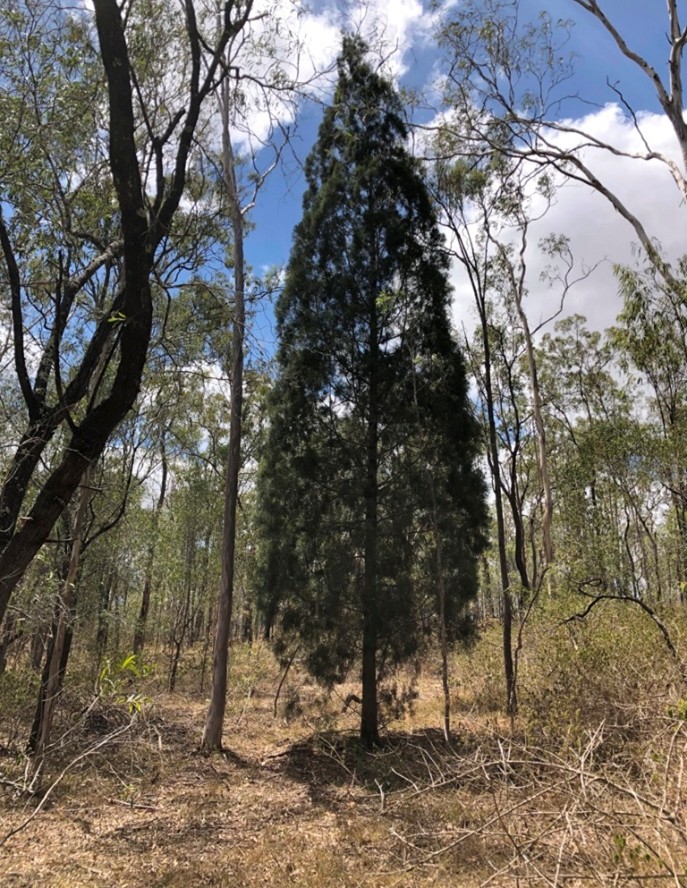 C. baileyi tree within Eucalypt Open Forest (photo by Martin Bennet - sourced from ALA).
Bailey’s Cypress Pine is considered a significant species in SEQ due to the relatively restricted nature of its populations and the pressures these ecosystems face from invasive weeds, altered fire regimes and landscape disturbance. Mature trees provide shelter and habitat for native wildlife, while healthy native understorey vegetation supports broader ecosystem function. Protecting remnant C. baileyi communities also helps preserve the unique environmental character of the region.
Through the NRRP, landholders are undertaking practical on-ground works to improve the condition and resilience of C. baileyi habitat. A major focus of these projects is the control of invasive weeds, particularly lantana, which can aggressively outcompete native vegetation and suppress natural regeneration. By reducing dense weed infestations, land managers are creating suitable conditions for young C. baileyi seedlings to establish and grow, supporting the long-term recovery of these populations.
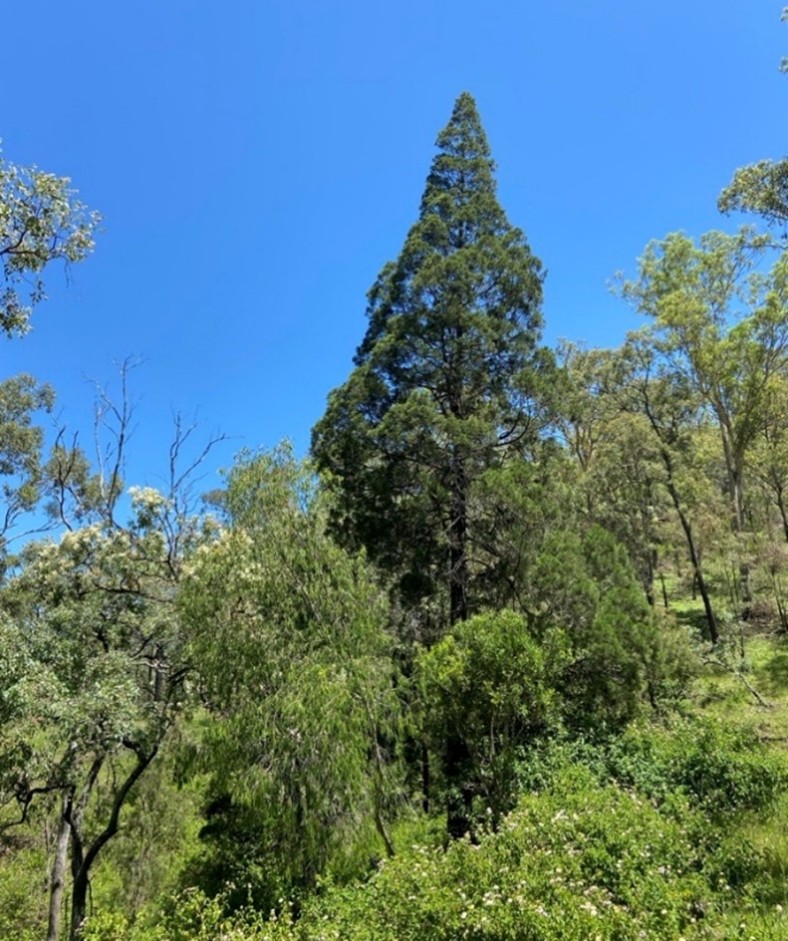 Mature C. baileyi tree amongst native recruitment as well as dense Lantana bushes (photo by Renee Ould).
Participating landholders are also implementing activities to reduce fuel loads and lower the risk of high-intensity bushfires within C. baileyi communities. While fire is a natural part of many Australian ecosystems, intense or unmanaged fires can significantly impact vulnerable vegetation and regenerating native species. Strategic fuel reduction works are helping protect mature trees and seedlings from damaging fire events, while improving overall landscape resilience and connectivity.
The NRRP is enabling land managers to take a proactive approach to conservation by combining biodiversity outcomes with practical property management. These projects highlight how local action and collaborative stewardship can play an important role in protecting significant native species and supporting healthier, more resilient landscapes across South East Queensland.
These on-ground works and community engagement have been supported by the Queensland Government's Natural Resources Recovery Program.


